Wednesday, March 8, 2017

My First Job

The earliest memory I have is of the day Dad took delivery of a new grey Ferguson tractor. Mum was in hospital for the birth of my brother, but the tractor is the dominant memory, obviously the more significant one.

A largely unused road ran through my grandfather's farm. It was raised to allow use during floods. The tractor was unloaded from a truck that was backed up to the raised road. As far as I can remember Dad still had that tractor when he sold the farm around 40 years later. As the years passed he also purchased a couple of Massey Ferguson 135s.

There is another memory that is almost as old. That is of Dad harnessing horses to a trailer to carry harvested sugar cane to Palmers Channel where it was loaded onto a barge to take it to the sugar mill on Harwood Island.

Cane cutters at work
In those days cane harvesting was very labour intensive. The harvest was always preceded by the cane fire. Burning helped clear the outer leaves from the stalk, cleared some of the weeds from the field, and no doubt sent any vermin, including snakes, scurrying.

Cane was cut by a gang of cane cutters who moved from farm to farm during the harvest season. A good cutter could swing his knife through five or six stalks at a time. The cane was laid in rows behind the cutters. From there it was loaded onto the trailers for transport to the cane barge. Neighbouring farmers helped each other with this task and it continued this way for a while after tractors replaced the horses.

It was not only hard work, it was hot and dirty. The cane was covered in ash from the fire and this left the workers black by day’s end.

The next change came when Dad’s cousin Alvin, who lived on an adjoining farm, purchased a Fordson Major tractor fitted with a front-end loader. Working row by row, the loader would scoop up a load of cane, reverse, move behind the trailer in the next row, place the load on the trailer, and repeat the procedure until the trailer was full.

Toft loader fitter to a caterpillar tractor. This replaced the Fordson Major. 

The front-end loader gave way to a Toft loader made by the Toft Brothers of Bundaberg. At first this was also fitted to the Fordson Major but the tractor needed modification. The driving position was changed to allow operation by the driver facing what normally was the rear of the tractor. The advantage of the Toft was that it allowed the cane to be lifted and then swung to the side, allowing it to be loaded onto the trailer travelling alongside. The cane was still cut by hand and the farmers continued to help each other haul the cane to the river bank.

Transferring the cane to the barge
Now the full process is mechanised with the cane being loaded directly into trailerised bins and transported by road to the mill.

It was in the cane fields I had my first paid employment. Harvest time often involved Saturday work. I can’t remember if I was 13 or 14 at the time, but cousin Alvin hired me to work as his ‘stalky’ on Saturdays.The job description was simple. Walk behind the loader and pick up the cane stalks that had been missed or dropped by the loader and throw them onto the next row. I did this until I left to start my apprenticeship at Wagga Wagga.

I loved watching the derrick man. He maneuvered the load to where he
wanted it. Then he threw a cane stalk at the catch to release the load.
Alvin was a good boss and I really enjoyed the work. While I was only a boy I was treated and felt like one of the men. There was no Mr. Davidson or Mr. Ellis. It was George and Eric. I am relatively certain that for a Saturday’s work I was paid two pounds, but even if it was only one pound (two dollars decimal) it was good money for a kid in those days. As a benchmark, when I joined the RAAF my first weeks apprentice pay was something like $12 or six pounds

Saturday, October 8, 2016

The Coming of the Box

I can’t remember how old I was when we had the electricity connected, but I can certainly remember life before it. We had electricity before Nana and Pa Marsh, but they had the phone before us. The first phone we had in our house was an extension of their line. Palmers Channel 37. Eventually we had our own line, Palmers Channel 44. Not that David or I were allowed to use it. In those days the phone was a luxury, only used when necessary. There was none of this in the door and straight to the phone stuff after school.

Our main source of light at night came from a kerosene pressure lantern, commonly known as a Tilley Lamp. As evening fell Dad would fill the lamp, check the wick, and pump up the pressure of the kerosene and light the lamp. From time to time the pressure would need a boost to keep the light burning. We also had a few kerosene lanterns that were nowhere near as effective.

I remember a kerosene refrigerator. It had a small freezer compartment - probably very small - that seemed to spend a lot of time frozen over. There was also a meat safe that hung under the persimmon tree at the side of the house. The tree itself was a bit of a draw card for flying foxes, but that was in the days before they were a protected species.

The electricity didn't bring instant change. Mum stilled used the wood stove for many years. As David and I grew one of our regular chores was to cut the wood and carry it to the wood box. This, especially the task of cutting, didn't seem a chore. It carried with it the feeling of growing up, something to feel good about.

Once, when I was quite young, I was playing on the wood pile in bare feet - bare feet being normal in those days. Among the wood supply was an old fence post that had a piece of barbed wire attached. I can't remember the screams, but I can still see that wire stuck in one of my toes and remember the trip to the doctor to have it removed. Another time I broke my arm in a fall on the wood pile.

It goes without saying there was no hot running water. When it came to bath time Mum boiled a kettle of water on the stove and poured this into the bath tub. Cold water was then added to cool the bath to a suitable temperature. It was barely enough to cover the bottom of the tub. It was similar with the dishes. We had an aluminium dish that was used only for the dishes and perhaps food preparation. It was placed on the bench, the kettle boiled, poured into the dish and cooled. Once washed the cutlery, dishes and other stuff was placed on an enamel tray next to the dish. Of necessity this was team work, with all capable hands on deck. I remember once placing a spoon in my mouth, pulling it out and showing it to Mum and Dad. ‘Look’ I said proudly, feeling good about my inventiveness. ‘This doesn't need washing, I've cleaned it.’

Our bath was similar to the one in this picture, only whiter. We did have a potty
under the bed  for night use, and other utensils were common at that time. Those
 in this shot probably go back to the late 19th century

Change came slowly. Sunday evenings Mum would fill the copper and light the fire so it would be ready to do the laundry next morning - the copper was also used to boil the Christmas pudding. Mum always put a blue block in the copper that was supposed to help whiten the sheets and other whites. All sheets and pillowcases were white in those days. After the washing had been boiled clean it was transferred to the large concrete laundry tub - which was divided into two sections. Here the excess water drained off before the laundry was transferred from one tub to the other, passing through the hand operated wringer on the way. The second tub was filled with water remove the excess soap and then the washing was transferred again through the wringer to the first tub. This process was repeated until it was judged that the soap suds had been removed. It was only then that the washing was hung out to dry.

In those days things like sheets, pillowcases, white shirts and petticoats were starched and ironed before the laundering was considered finished. Now I can’t be sure of the process, but I am certain that Mum put a starch mixture in a large dish to starch the necessary items and this must have been before they were hung out to dry.

Mum had an ironing set - two or three irons with a shared handle. The irons were placed on the stovetop to heat. Once heated, the handle would be attached to one and the ironing would start. As the iron cooled it would be placed back on the stove and another would take its place.

Our first washing machine was a Hoover twin tub - one tub for washing and the other for spin drying. It was quite small by today's standards. Funnily,  when I was first married we rented a furnished house in Richmond. It had an outside laundry with a similar concrete tub to the one we had on the farm. The supplied washing machine was a larger single tub fitted with a hand wringer. This was late 1974.

We played 78 rpm records on a gramophone, trying as hard as possible not to drop the needle onto the record thus scratching it.

Before the advent of television our main contact with the outside world was the wireless. I remember both sets of grandparents had rather large, battery powered wireless sets after they had the electricity connected. I remember one day Pa Marsh won an electric radio in a competition and this was probably the first electric one he owned. He may well have still had it when he died. I can’t remember if our first wireless was powered by electricity or battery.

This was the day of radio serials and comedies. I don’t think we missed out on anything. I read or heard someone some years back say the radio was a better medium than television as the listener was forced to imagine the scene being played out. Being forced to imagine resulted in greater creativity.

Mum hardly missed an episode of Blue Hills, Australia’s longest running radio play. We  listed to The Muddle-headed Wombat, Dad and Dave, the Goons, the Lone Ranger, and many I have no doubt forgotten. The ABC (and we only had the one ABC and one Commercial station) had a children’s program Jason and the Argonauts. All kids could join up as Argonauts, but I can’t remember if I did or not.

Television came to Australia in 1956, with the Olympic Games of that year being used as a test transmission by all three Melbourne stations. Brisbane began transmission in 1959, but it was not till 1964 that RTN 8 began broadcasting from Lismore. It was probably a little later that the ABC also began broadcasting from Lismore.

I still remember the first time I saw TV. Granny Carter’s brother Jim Orr and his wife Mary lived on Middle Road, Palmers Island. Their daughter Connie and husband Kelvin (Pa Marsh’s youngest brother) lived next door. One of them bought a box and we were invited to a screening. My first recollection is of a TV aireal on top of a long pole about 200 feet high (okay, I was still a kid). The picture was transmitted from Brisbane. It was black and white, and very poor. It appeared everything was taking place in a snowstorm and there was some sort of screen placed in front of the set that was meant to improve the picture. I doubt if it did, but there we sat enthralled.

We must have bought a set not long after television came to Lismore. I was to leave home a little over 2 ½ years later. Transmission probably began at 5 pm and finished around  11. It began with a prologue and ended with epilogue - from memory a message from one of the local clergy - and most likely a rendition of ‘God Save the Queen’. For the rest of the time the station played a test pattern.

I well remember Uncle Dick. Dick hosted the children's’ program, read the news and presented the weather. It was the latter that I best remember him for. He used something like a peg board to help with the weather presentation with one section sliding over the other when needed for the next bit of information. On this particular night it fell apart as he tried to move it. Another evening he became tongue tied, telling us the next day we could expect ‘shattered scours.’ But why would we have believed him anyway? After all, it was only in black and white.

Tuesday, March 1, 2016

An Unwanted Invitation

‘Mr Marsh, we have no record of you entering the country.’ That was not expected and it was most unwelcome. The last thing I wanted was a few nights as a guest of the Government of Papua New Guinea.


It was 1997 and the trip had started well. I got a free upgrade to Business Class for the flight from Sydney to Cairns. Now I can’t compare the Business Class service back then to what happens today, but the meal was served with a linen napkin, real plates and cutlery. There were few security concerns in those days.

Sopas Hospital


Sunday afternoon in Cairns was most enjoyable. I spent some hours walking around and one day I might find some of the photos I took. I had not realised till then that Catalinas had operated out of Cairns in WW 2. Dad’s cousin by marriage, Don Day, had been a Catalina pilot so may have spent time in Cairns.


Monday morning and I was scheduled to catch an Air New Guinea, or ‘Air Arse-Grass’ as I believe it is called - to Mount Hagen at eight in the morning. At Mount Hagen I was to meet a staff member of Sopas Adventist Hospital who would take me to my planned destination about 20 minutes out of Wabag, the capital of Enga Province.


Now everyone knows you have to be at the airport two hours before the departure of an international flight, so I turned up at six. An hour later signs of life began to emerge.


By 8 a.m. we were all seated, ready to depart, but there was a delay. ‘Ladies and gentlemen,  will you please leave your bags on the plane and return to the Departure Lounge’ came the message. ‘We have a technical problem’. So we did.


Some time later: ‘Ladies and gentlemen,  please return to the aircraft, collect your belongings, and return to the terminal. We have a fuel pump problem.’ Time passed.


Finally the announcement came. ‘Passengers for Mount Hagen on flight number whatever, your flight is now ready to leave. Will you please proceed to the aircraft.’ Then, as we were leaving the terminal we heard the announcement: ‘This is to advise passengers on Air New Guinea flight whatever, due to depart at 10 a.m., your flight has been delayed.’


Where I slept
So I arrived at Mount Hagen two or more hours late, only to face another delay. I had a special visa that was available to Church employees owing to the fact that we did a lot of travel to PNG. It was managed electronically. ‘We are sorry Mr. Marsh. We can only process your visa when we have a landline connection to Port Moresby. Because you are late you will have to wait for the next flight to arrive - in about 2 hours time.


So there was nothing to do but relax and enjoy the comforts of the Mount Hagen International Terminal. It was nothing more than a shed with a tin roof. No air conditioning, food, or other services one  normally expects at an airport. As for customs and immigration control? Anyone could walk through the terminal at anytime and talk to whoever they wanted to.


My hosts had already been waiting for some time pick me up. Now we had the opportunity to get to know each other a while longer before we started on the trip to Sopas. Eventually the next flight arrived, the connection was made, my visa processed, and we were on our way.


It was a trip to remember. The vehicle was a Toyota Land Cruiser, a multi-purpose vehicle that served as ambulance, goods carrier, or taxi. On the return trip I really felt for a couple of passengers lying on  stretchers in the back. I can't remember any mattresses, only the stretcher placed directly on the metal tray.


The road was little more than a pot-holed, corrugated gravel track. The truck rattled and every irregularity in the road was felt. I remember the only thing that attached the glove box lid to the vehicle was the latch at the top. The bottom was free to flap in the breeze.

Hospital
Then, of course, there was the unexpressed - and, I hope, well hidden - anxiety that armed rascals may have prepared a welcome around the next corner. It was a relief to finally arrive without incident. The hospital was forced to close a couple of years later because of the danger to staff and patients from rascals and tribal rivalries.


My first night I was thankful I had followed the advice of my hosts. I had spent six weeks in PNG with the RAAF in 1975, including an hour or so on the ground in Mount Hagen. It was hot and humid all the time. So when I was told to take a change of warm clothes my first reaction was ‘Why?’ No way, I thought, what a waste of space. It was only a last minute, spur of the moment decision to throw in a jumper. The couple of nights I slept at Sopas I needed blankets.


Fortunately,  I escaped without any rascal experience.  Despite the fact I was there to work it was a relaxing experience. At 1,830 M or 6000 feet above sea level the climate was comfortable. There were no mosquitoes, which are a concern in much of the country. Without television and an early enforced lights out owing to the fact that the facility relied on generators for its power supply, relaxation was virtually mandated.


The trip also gave me a real appreciation of how fortunate I am to live in Australia. I cannot imagine how we would feel in Australia if the Sopas ambulance arrived at our door in response to our emergency call. Well equipped is not the word to describe it. Even spartan appears a little too luxurious.


Conditions at the hospital were little better. It was clean, but medical equipment and supplies were quite basic. A well stocked first aid room in an Australian factory would probably be better off.  But it provided a much needed service in the Wabag Province.


After leaving Sopas I flew from Mount Hagen to Port Moresby as I had a few days scheduled at Pacific Adventist University, located just out of Moresby. Another delightful Air Arse Grass flight in a seat with a backrest that would not stay upright.


Then it was time to return to Sydney. I duly presented my passport to immigration. Then, “Mr Marsh, we have no record of you entering the country.” Instantly I had visions of rats, fleas, a concrete floor and a bucket in the corner for a toilet. Perhaps my vision of the type of accommodation I imagined could be offered to me by by new hosts was a little unkind, but I think not.


Some fast talking, explaining that I had entered at Mount Hagen, and I was on my way home. Perhaps the Immigration Official had had previous experience with the landline from Mount Hagen, or maybe he was a very nice man who believed my story and gave me the benefit of the doubt.

Saturday, February 20, 2016

Life of Service

Some years back we were returning from a week long Church camp at Stuarts Point when I pulled into a service station to refuel. As I returned to the car after paying this sleek, black Ferrari convertible pulled into the next bay. Out jumped the driver without opening the door,  black hair all nicely greased back, which set the tone for my first impression of the young man - sleazy young ...

My daughter piped up ‘That’s a nice car Dad’.

Yeah, I thought, looking at my old bomb, a 1994 Holden Berlina with over 300,000 kilometers on the clock. Talk about a looser. How do I make myself look good in this situation?

‘I’ll have you know’, I blurted out, ‘I spent the first 20 years of my working life in the air force.' ‘The air force was not about making money; it was about service to the nation. I have spent the rest of my life working for the Church. The Church is not about making money, it is about service. I feel good that my life has been one of service rather than serving the corporate interest.’

Receiving Defence Force Service Medal for 15 years service

And as soon as I said it I felt good about myself. ‘How did I come out with that?’ I thought. Not that I have anything against companies and other organisations that exist to make money, so long as it is done ethically. These can also provide much needed goods and services to the community.

The best thing about this little encounter came a few months later when my daughter said to me: ‘Dad, when I finish school I want to do something that serves others’.  At the end of last year she graduated with a Primary Teaching degree and is now looking for work. When we work for organisations, whether they are profit making or not-for-profit, to the extent that they provide valuable goods and services to the community we all serve. Yet in my mind, there remains something different, something good, about those organisations that exist primarily to serve, not to profit. And there are those who work for them - teachers, nurses, firefighters, police, to name a few. Not to mention, of course, the many volunteers who give freely of their time delivering meals on wheels, working for the SES, raising money for worthy causes and more.

As Australians we hear these words each ANZAC day - words that are written on many memorials across the country.

‘Greater love hath no man than this, that a man lay down his life for his friends.’ (John 15:13)

On ANZAC day we commemorate service and sacrifice on behalf of others. That same spirit shown by the ANZACs is shared by those who volunteer their time for others, and by those who accept less than they might otherwise earn to work in service-related fields.

Sometimes I wonder what difference it would make to our country and the world if we all lived with an attitude of service.

Saturday, January 2, 2016

Underpants, or Lack Thereof

Palmers Channel Public School was divided into two rooms that could be opened to form one if required. All instruction was carried out in the one room. The other was used rarely, although it did house the stage from which the students presented the annual school concert.

One particular day it had a different use. We had a visit from a medical person who had come to check out the students. All the boys were lined up on the stage stripped to the waist waiting our turn. The girls were in the other room undergoing instruction.If the girls had turned around they could see what was happening on the stage as the divider was windowed.

‘Are you wearing underpants?’ the doctor asked the first boy. ‘No,’ he answered. So the boy kept his shorts on for the examination. Next boy, same question. Again, the answer was “No’. And so it continued until it was my turn. I approached the doctor nervously, waiting for the question, but this time it didn't come.

I found out later the kid in front of me, when his turn came, answered ‘no’ when asked, although he was wearing underpants. So by the time the doctor got to me he probably figured that asking was pointless. This was good for me, as I was not looking forward to answering honestly and it had not occurred to me to do anything else.

There is another part to this story. Recently I recounted the experience at a family picnic in Mum’s presence. She recalled the time she was seated next to a friend, Mary, at a school function. The kids, or at least the boys, were seated facing the parents. Mary's son had a little more on display than she cared to see but she noticed I was covered. ‘What's Kenneth wearing?’ Mary asked Mum. ‘Underpants’, replied Mum. ‘Oh’, said Mary.  ‘Where do you buy those?’

Saturday, August 15, 2015

Kings and Causleys

William King was born in Baltimore, USA around 1816. His parents may have been Vince and Phebe, but this has not been verified.

Most likely he arrived in Australia in the late 1830s. His marriage to Catherine Kiely (Reilly) in St Peter and Paul’s Church in Goulburn (Presbyterian) on 5 December 1840 is the first hard evidence of his presence in Australia. Catherine’s family owned a brick making business in Goulburn and, as William was a brick layer, they may have met through the business.

As a child I was told that Grandfather King built the Goulburn gaol, but it seems more likely that he was one of the bricklayers employed in the endeavour. Some years back I dropped into the Goulburn Historical Society and was told there have been three gaols in the city. Likely, the building involved was the one proclaimed in 1847.

Catherine (in the records there are different spellings of her surname) was born in Kilkenny, Ireland, in 1824 to John and Bridget. She appears to be the youngest of three children, the others being John and Bridget. They are thought to have arrived in Australia around 1838 and immediately settled in the Goulburn district.

After their marriage William and Catherine remained in and around the Goulburn area. They had 10 children over a 20 year period. The eldest, John L. King was probably born in 1841, but there is little information about him. Austin, the second child became the major branch of the family tree.

They moved to Tuena, an hour West of Goulburn, in the early 1860s and it was here that Catherine died at the age of 39. She is buried in the Goulburn General Cemetery.

William did not marry after Catherine’s death, which was unusual for the time. His elder children returned home to help care for their younger siblings. William died in 1902 at the age of 86.

Their seventh child, Ema, was born on 3 December 1853. In 1879, at the age of 26, she married James Casey, with whom she had two children, one of whom died young. James died in January 1883.
 
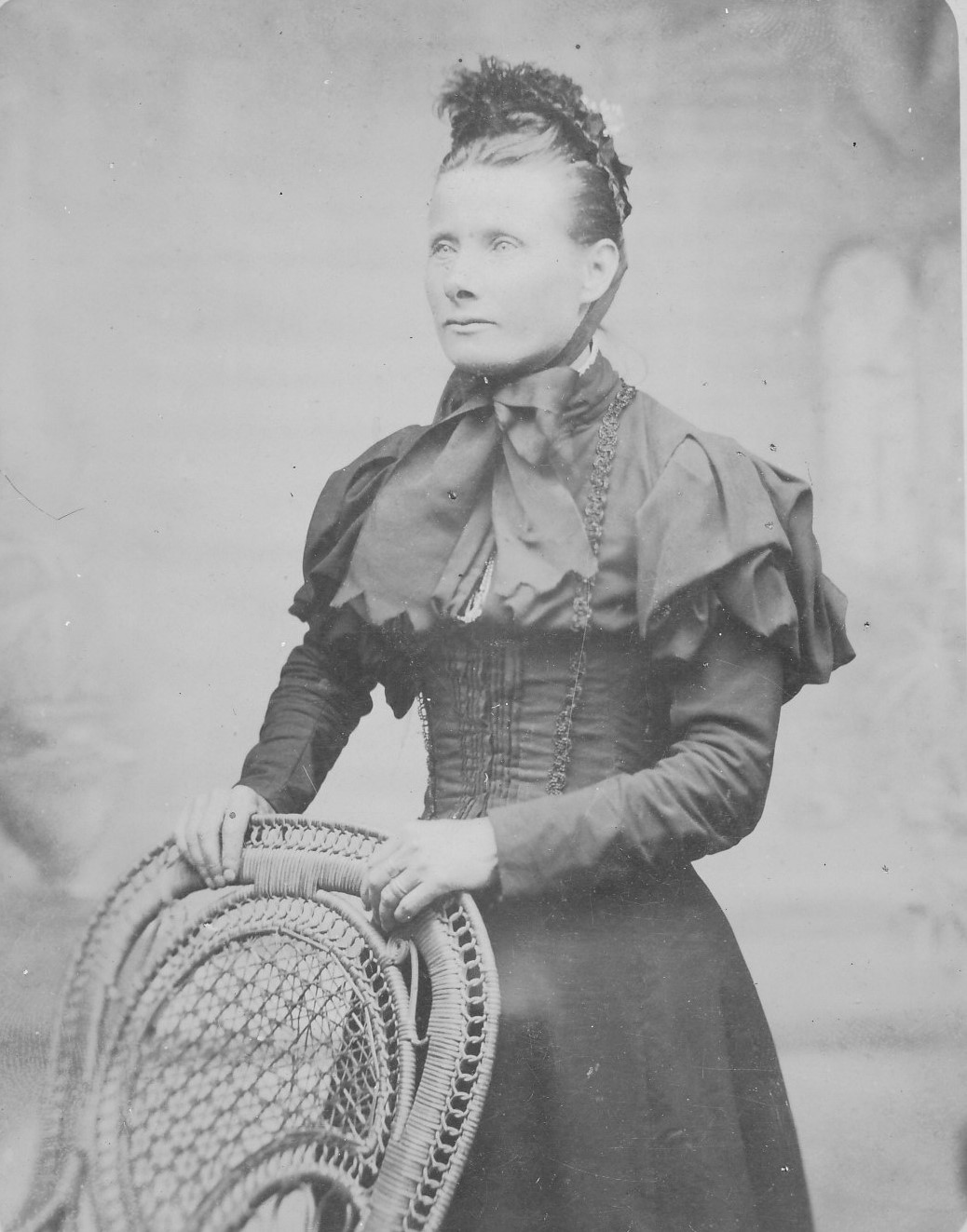
Ema King


The following year she married Thomas Causley. Following their marriage, according to my source, they moved to Monaro where Thomas was engaged in sheep farming. After selling up they moved to Cooma where they bought a store, and from there to Sydney.

Now there is more to the story than that. My Grandmother, Eva Skinner, nee Causley, lived for a while in the original Adaminaby which is now covered by Lake Eucumbene. Nana and her sister, Aunty Maud, used to recall how it got so cold there in winter the milk would freeze in the jug on the table overnight. They also lived in Kiama on the NSW South Coast.

According to the oral family history, Thomas Causley bought and sold hotels. According to the ‘Monaro, Mercury, and Cooma and Bombala Advertiser’ of Saturday 26 June 1886, the Cooma Licensing Court renewed the license of the Kiandra Hotel in the name of Thomas Causley. Then, on 24 December 1909, as recorded in the ‘Adelong and Tumut Express and Tumbarumba Post’ the Special Licensing Court granted Thomas Causley was granted a licence for the Yarrangobilly Hotel. While one of both of these may not be my Great-Great Grandfather they fit with the family history.

Thomas and Emma had five daughters; Ada, Emily, Essie, Eva and Maud; and one son whose name I do not have and may have died young. The three eldest were born deaf, dumb and blind, or at least with some combination of these three disabilities. I remember my Grandmother, Eva, and her sister Maud often communicating with each other using their fingers in the way they would have communicated with their sisters.

As a young woman Eva moved to Harwood Island to work for her Uncle Samuel Causley and his wife. It was while working here that she met my Grandfather, Henry Skinner. They were married in 1916.

Following the death of Thomas, Emma and Aunty Maud – who remained single – came to visit Nana and Pa Skinner. They never left. Mum tells the following story.

One day Henry asked Eva ‘Did you invite your Mother and Maud to stay?’

‘No’ answered Eva. ‘I thought you did.’


So much for family communication.  

Friday, August 7, 2015

The Water Supply

This water bottle sits in the back of the cupboard, never used, wasting space. But I will not throw it away as, strangely enough, I value it.

I have no idea how old it is. For as far back as I can remember this sat in the kitchen of Nana and Pa Marsh. On a hot day it was always full of cold water. It is one of the few possessions of theirs that I have.

On the farm we got our water from corrugated rainwater tanks. We had two, one fed from the roof of the house and the other, just outside the garden fence, fed from the roof of a shed. If the one next to the house got low Dad pumped water from the reserve tank.

Nana and Pa also had two tanks. One however was an underground concrete tank and this kept the water beautifully cold in summer.

Today most of us get water from the town or city water supply. It has additives we never heard of as kids - fluoride and chloride - to protect our health if we believe the authorities. It is only of recent years that in places like Sydney citizens have been permitted to install rainwater tanks. However it is recommended we don't use the water from these for drinking of cooking. This may be detrimental to our health.

I wonder.

If it didn't rain for a few weeks - or more - the birds still sat on the roof and did as birds do. Who knows what creepy crawlies collected in the guttering that fed that tanks and sometimes died there. All this only added to the nutritional mix.

At times a pong would emanate from one of the tanks. 'Neville', Mum would call. 'I think there's a dead frog in the tank.' And, sure enough, there usually was, not that I understand how they got in  as there was a cover that should have kept them out. Now sometimes we could afford to drain one of the tanks and clean it out. But at other times this was not so which meant lift out the frog and continue as normal.

We survived, without any ill effects. Sometimes I wonder if that added nutrients only strengthened our immune system and if we have not got too cautious with the passing of the years.